Generational Differences and the IKEA Effect
Spring is a time of renewal and – more important to Virgos like me – of cleaning and organization. Not much excites me more than

Spring is a time of renewal and – more important to Virgos like me – of cleaning and organization. Not much excites me more than
For many years, I’ve had a tradition of choosing a word of the year. Rather than setting resolutions, the word of the year gives me
Do you use all of your sick days? If you’re a people leader, do you positively acknowledge when your employees do? This is a generational
“Leap, and the net will appear” is a quotation I definitely pasted in a journal or on a vision board at some point in my
They say the best book to write is the one you wish you had and couldn’t find — and that’s exactly why I wrote Getting
When I was a sophomore in high school, I had my first and only lead role in my high school’s musical. That year, it was
I was recently at the nail salon, and I had to pick a color for my manicure. There must have been at least 400 options,
As I continue my year of refinement, I want to take some time to reflect on my biggest refinement to date: deleting my Facebook and
On Friday, December 23, as I was checking off my final to-do list items for 2022 (you know I love a good checklist), I felt
As many of you know, I center each new year around one defining word. This year, that word is: REFINE Some of you may have
Lindsey is a globally recognized career and workplace expert and the leading voice on generational diversity. She has spoken for more than 300 audiences including Google, Goldman Sachs, Estee Lauder, Stanford and Wharton. Lindsey is the author of four career and workplace advice books, and her insights have appeared in media outlets including The TODAY Show, CNBC, NPR, the Harvard Business Review and the Wall Street Journal.
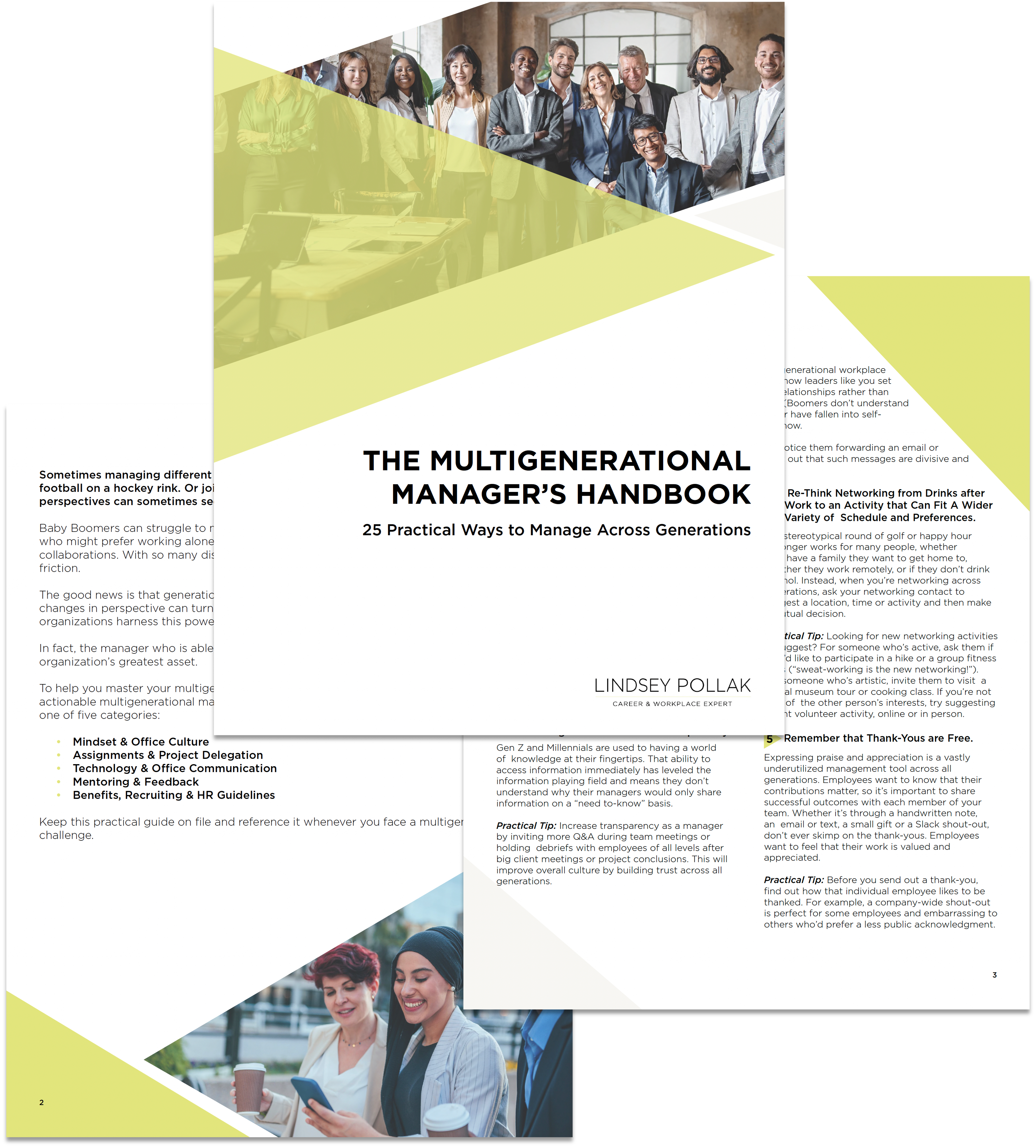
Lindsey Pollak is a New York Times bestselling author, international speaker and often described as a “generational translator.” She is the author of four career and workplace advice books, including The Remix: How to Lead and Succeed in the Multigenerational Workplace. Her speaking audiences and consulting clients have included more than 300 top corporations, law firms and universities, and her insights have appeared in such media outlets as The TODAY Show, The Wall Street Journal and CNBC. Lindsey is a graduate of Yale University and is a proud member of Generation X.